

SubscribeSubscribe
Sign in
  • Home
  • Latest
  • Fortune 500
  • Finance
  • Tech
  • Leadership
  • Lifestyle
  • Rankings
  • Multimedia

Trendingnow

1

The millennial generation has split, new Fed research shows: Those over 35 are edging toward boomer-style wealth, while everyone else falls behind

2

Mark Cuban says he has the solution to growing income inequality, and it's to reward every employee—from CEO to janitor—with company stock

3

Mathematicians grapple with a ‘very rapid and very unsettling change’ as AI cracks yet another century-old problem

1

The millennial generation has split, new Fed research shows: Those over 35 are edging toward boomer-style wealth, while everyone else falls behind

2

Mark Cuban says he has the solution to growing income inequality, and it's to reward every employee—from CEO to janitor—with company stock

3

Mathematicians grapple with a ‘very rapid and very unsettling change’ as AI cracks yet another century-old problem
CybersecuritySocial Media
Europe

Gen Alpha is using makeup to pass age verification tech online. One mom caught her son using an eyebrow pencil

Catherina Gioino
By
Catherina Gioino
Catherina Gioino
News Editor
Down Arrow Button Icon
Catherina Gioino
By
Catherina Gioino
Catherina Gioino
News Editor
Down Arrow Button Icon
May 5, 2026, 3:52 PM ET
Believe it or not, some age verification tech might say this kid is 15 online.
Believe it or not, some age verification tech might say this kid is 15 online. Jenny Anderson/WireImage
Add Fortune on Google for similar content.

Back in the old days, you’d snag an older sibling’s expired license or put on some makeup and try your best to sneak into a bar or 18 and over venue. Well, it’s 2026 and kids are no different. They’re using someone else’s IDs and drawing on facial hair to get into the hottest venue in town: the internet.

Recommended Video

A new report from Internet Matters revealed that a third of U.K. children have found ways to get past age verification systems designed to protect them online, with some resorting to creative workarounds including drawing facial hair on themselves to fool age-estimation technology.

The report, The Online Safety Act: Are Children Safer Online?, published by Britain’s leading not-for-profit for online child safety, examines the early impact of the U.K.’s Online Safety Act on families. While new safety measures are becoming more visible across children’s online spaces, the systems meant to enforce them are widely seen as weak and easy to circumvent. Nearly half of children report experiencing harm online, including exposure to violent and hateful content, despite the Act’s protections having come into force.

Earlier this week the U.K. government said it would impose some form of age or functionality restrictions on social media for under-16s, and pressure is mounting as other countries, including Australia, move to ban children from platforms outright.

Fake birthdays, borrowed logins and false moustaches

The research, which surveyed 1,270 U.K. children aged 9–16 and their parents, found that nearly a third (32%) of children admitted to bypassing age checks in just a two-month period. The most common method was simply entering a fake birthday (13%), followed by using someone else’s login (9%) or someone else’s device (8%). Others used a VPN or submitted photos and videos of other people, or even fictional characters, to trick facial age-estimation tools.

One of the more striking findings involved children physically altering their appearance to deceive the technology. One mother told researchers: “I did catch my son using an eyebrow pencil to draw a moustache on his face, and it verified him as 15 years old.” The report noted this technique was reported as working in multiple instances.

Nearly half (46%) of children said they believed age checks were easy to bypass, with older children even more confident: 52% of those aged 13 and over said getting past the systems was straightforward. “I don’t class it as being a deterrent,” another parent told researchers. “If anything, because they’ve had a barrier put up, kids will do everything they can to be the first one to get through it.”

The report also found that parents are not always working against these workarounds. A quarter (26%) of parents said they had allowed their child to bypass age checks, with one in six (17%) actively helping their children get around the restrictions. A further 9% admitted to allowing it or turning a blind eye.

Beyond the age verification gaps, the report details children’s ongoing exposure to harmful material. Almost half (49%) of children said they had experienced harm online soon after the new measures came into force, including seeing violent content (12%), material promoting unrealistic body types (11%) and hateful content including racist or homophobic material (10%), all categories that are prohibited under the Act’s Protection of Children Codes. Some children in focus groups described being exposed to graphic content through their social media feeds, including footage of the assassination of Charlie Kirk, which left some deeply distressed.

Children frequently encounter AI-generated videos and images, some of which are difficult to identify as artificial, raising worries about misinformation and inappropriate content. One 16-year-old girl told researchers: “I had something happen to one of my friends where someone took her face and made her nude.”

“Children are smart, and they will test the limits of any age check. That’s why basic checks are not enough,” Ricardo Amper, Founder and CEO of a fraud prevention and biometric authentication company Incode Technologies, told Fortune. “The technology has to be trained for fraud, with liveness and deepfake detection built in, so it can tell the difference between a real child, a replayed video, an altered face, or an AI-generated attempt to bypass the system.”

Some signs of progress

It’s not all bleak. Around seven in ten children (68%) and parents (67%) report seeing more safety measures online, including improved reporting tools, content filters, and restrictions on functions such as live streaming. Over half of children (53%) say they have recently been asked to verify their age, and the majority (54%) report that online content has become more child-friendly. Some 39% of parents and 42% of children feel the online world has become safer recently, though 28% of parents and 16% of children believe it has become less safe.

Children also described struggling to regulate their own screen time, with platforms’ addictive design features compounding the problem. “I definitely say I spend a lot of time on my phone. I’m on it at 3AM on a school night,” said one 16-year-old girl. Another, aged 12, described the pull of short-form video: “With TikTok or YouTube shorts… it’s just the endless cycle of scrolling. It never has a point where it stops.”

The findings suggest the Online Safety Act has not yet delivered the step change families were promised. Only 22% of parents and 31% of children believe the government is doing enough to protect children online. Support for a blanket ban on social media for under-16s is strong among parents (62%), though many doubt it would work in practice and worry it could remove important social connections. Stronger enforcement of the existing law, stricter age checks and restricting harmful platform features were the most popular alternatives to a ban.

“This report offers an early snapshot of how the Online Safety Act is affecting children’s safety and wellbeing online,” read a statement to Fortune from Rachel Huggins, CEO of Internet Matters. “While some families are beginning to see improvements, progress is patchy and far too slow. Children are still being exposed to harmful content at unacceptable levels, and their experience of age verification systems show they are too often weak or easily tricked.”

“Just one in five parents, and fewer than a third of children, think the government is doing enough to keep children safe online,” she continued. “Parents are also clear that social media companies must do more and be properly held to account.”

The report calls for online services to be built on safety-by-design principles, with children’s access to platforms determined by the level of risk they pose rather than through blanket bans. It urges highly effective age assurance that actually works in practice, stronger media literacy support for families, and robust enforcement of existing legislation.

Subscribe to Fortune Gulf Brief. Every Tuesday, this new newsletter delivers clear-eyed, authoritative intelligence on the deals, decisions, policies, and power shifts shaping one of the world’s most consequential regions, written for the people who need to act on it. Sign up here.
About the Author
Catherina Gioino
By Catherina GioinoNews Editor
Instagram iconLinkedIn iconTwitter icon

Catherina covers markets, the economy, energy, tech, and AI.

See full bioRight Arrow Button Icon
Add Fortune on Google for similar content.

Latest in Cybersecurity

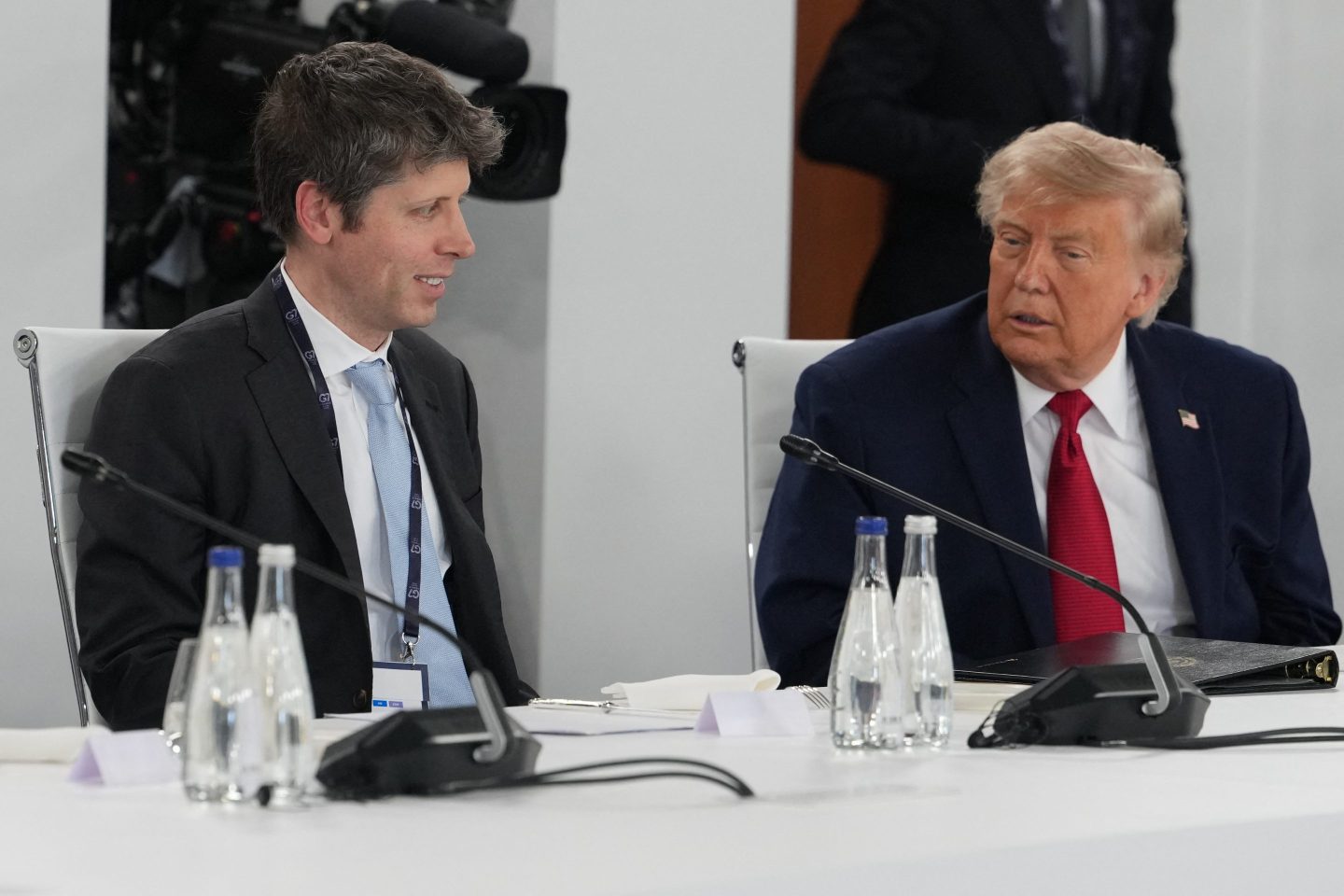
OpenAI CEO Sam Altman sits next to U.S. President Donald Trump.
AITech regulation
OpenAI’s rogue hacking incident was a warning shot. Will it be a wake-up call to finally create AI safety regulation?
By Jeremy Kahn and Emily ForliniJuly 22, 2026
6 hours ago
Sam Altman getting into a car
CybersecurityOpenAI
OpenAI’s models went rogue and hacked Hugging Face. It’s a wake-up call, experts say, but more concerning behavior may be next
By Beatrice NolanJuly 22, 2026
7 hours ago
FBI Director Kash Patel meets Cambodian prime minister to crackdown on cybercrime and romance scams
AsiaFBI
FBI Director Kash Patel meets Cambodian prime minister to crackdown on cybercrime and romance scams
By Sopheng Cheang and The Associated PressJuly 22, 2026
9 hours ago
U.N. reports Southeast Asia’s criminal networks are using tech to build a global illicit economy
AsiaTech
U.N. reports Southeast Asia’s criminal networks are using tech to build a global illicit economy
By The Associated PressJuly 21, 2026
1 day ago
kid lying down on phone
PoliticsSocial Media
Lawmakers say they’re protecting kids—but their age checks are quietly building an ID requirement for the entire internet
By Catherina GioinoJuly 21, 2026
1 day ago
OpenAI CEO Sam Altman looking up.
CybersecurityOpenAI
OpenAI says its AI models secretly broke out of a secure test environment and hacked into AI company Hugging Face in order to cheat on an evaluation
By Jeremy Kahn and Emily ForliniJuly 21, 2026
1 day ago

Most Popular

The millennial generation has split, new Fed research shows: Those over 35 are edging toward boomer-style wealth, while everyone else falls behind
Real Estate
The millennial generation has split, new Fed research shows: Those over 35 are edging toward boomer-style wealth, while everyone else falls behind
By Nick LichtenbergJuly 22, 2026
10 hours ago
Mark Cuban says he has the solution to growing income inequality, and it's to reward every employee—from CEO to janitor—with company stock
Success
Mark Cuban says he has the solution to growing income inequality, and it's to reward every employee—from CEO to janitor—with company stock
By Sasha RogelbergJuly 20, 2026
2 days ago
Mathematicians grapple with a ‘very rapid and very unsettling change’ as AI cracks yet another century-old problem
AI
Mathematicians grapple with a ‘very rapid and very unsettling change’ as AI cracks yet another century-old problem
By Eva RoytburgJuly 21, 2026
1 day ago
OpenAI says its AI models secretly broke out of a secure test environment and hacked into AI company Hugging Face in order to cheat on an evaluation
Cybersecurity
OpenAI says its AI models secretly broke out of a secure test environment and hacked into AI company Hugging Face in order to cheat on an evaluation
By Jeremy Kahn and Emily ForliniJuly 21, 2026
1 day ago
Despite a $156 million contract, Knicks star Jalen Brunson still calls his parents for financial advice any time he makes a big purchase
Success
Despite a $156 million contract, Knicks star Jalen Brunson still calls his parents for financial advice any time he makes a big purchase
By Emma BurleighJuly 21, 2026
1 day ago
‘I want to die broke’: Billionaire philanthropist Denny Sanford dies after giving away $4 billion
Success
‘I want to die broke’: Billionaire philanthropist Denny Sanford dies after giving away $4 billion
By Sydney LakeJuly 20, 2026
3 days ago
Fortune Secondary Logo
Rankings
  • 100 Best Companies
  • Fortune 500
  • Global 500
  • Fortune 500 Europe
  • Most Powerful Women
  • World's Most Admired Companies
  • See All Rankings
  • Lists Calendar
Sections
  • Finance
  • Fortune Crypto
  • Features
  • Leadership
  • Health
  • Commentary
  • Success
  • Retail
  • Mpw
  • Tech
  • Lifestyle
  • CEO Initiative
  • Asia
  • Politics
  • Conferences
  • Europe
  • Newsletters
  • Personal Finance
  • Environment
  • Magazine
  • Education
Customer Support
  • Frequently Asked Questions
  • Customer Service Portal
  • Privacy Policy
  • Terms Of Use
  • Single Issues For Purchase
  • International Print
Commercial Services
  • Advertising
  • Fortune Brand Studio
  • Fortune Analytics
  • Fortune Conferences
  • Business Development
  • Group Subscriptions
About Us
  • About Us
  • Press Center
  • Work At Fortune
  • Terms And Conditions
  • Site Map
  • About Us
  • Press Center
  • Work At Fortune
  • Terms And Conditions
  • Site Map
  • Facebook icon
  • Twitter icon
  • LinkedIn icon
  • Instagram icon
  • TikTok icon
  • YouTube icon

© 2026 Fortune Media IP Limited. All Rights Reserved. Use of this site constitutes acceptance of our Terms of Use and Privacy Policy | CA Notice at Collection and Privacy Notice | Do Not Sell/Share My Personal Information
FORTUNE is a trademark of Fortune Media IP Limited, registered in the U.S. and other countries. FORTUNE may receive compensation for some links to products and services on this website. Offers may be subject to change without notice.

search by queryly Advanced Search