Sixteen generated images from 2026-07-21, produced by running eight prompts through two image models and importing the results. The set inverts the method of Style-led wiki redesign mockups: where those explored visual style with the feature set held fixed, these were written from the wiki’s features — lifecycle states, redlinks, provenance, tags, questions, note types, the link graph, and embedded diagrams — with no reference to the interface that existed.
Each subject was rendered twice, once per model, which makes the pairs useful in a way a single image is not: where the two models agree, the agreement is a property of the prompt rather than of one model’s habits.
| Subject | Images |
|---|---|
| Lifecycle-first note view | one, two |
| Redlink research queue | one, two |
| Provenance and citation trail | one, two |
| Tag merge-candidate audit | one, two |
| Question-note frontier | one, two |
| Type-aware note composer | one, two |
| Link-graph cluster explorer | one, two |
| Diagram and chart embedded in a note | one, two |
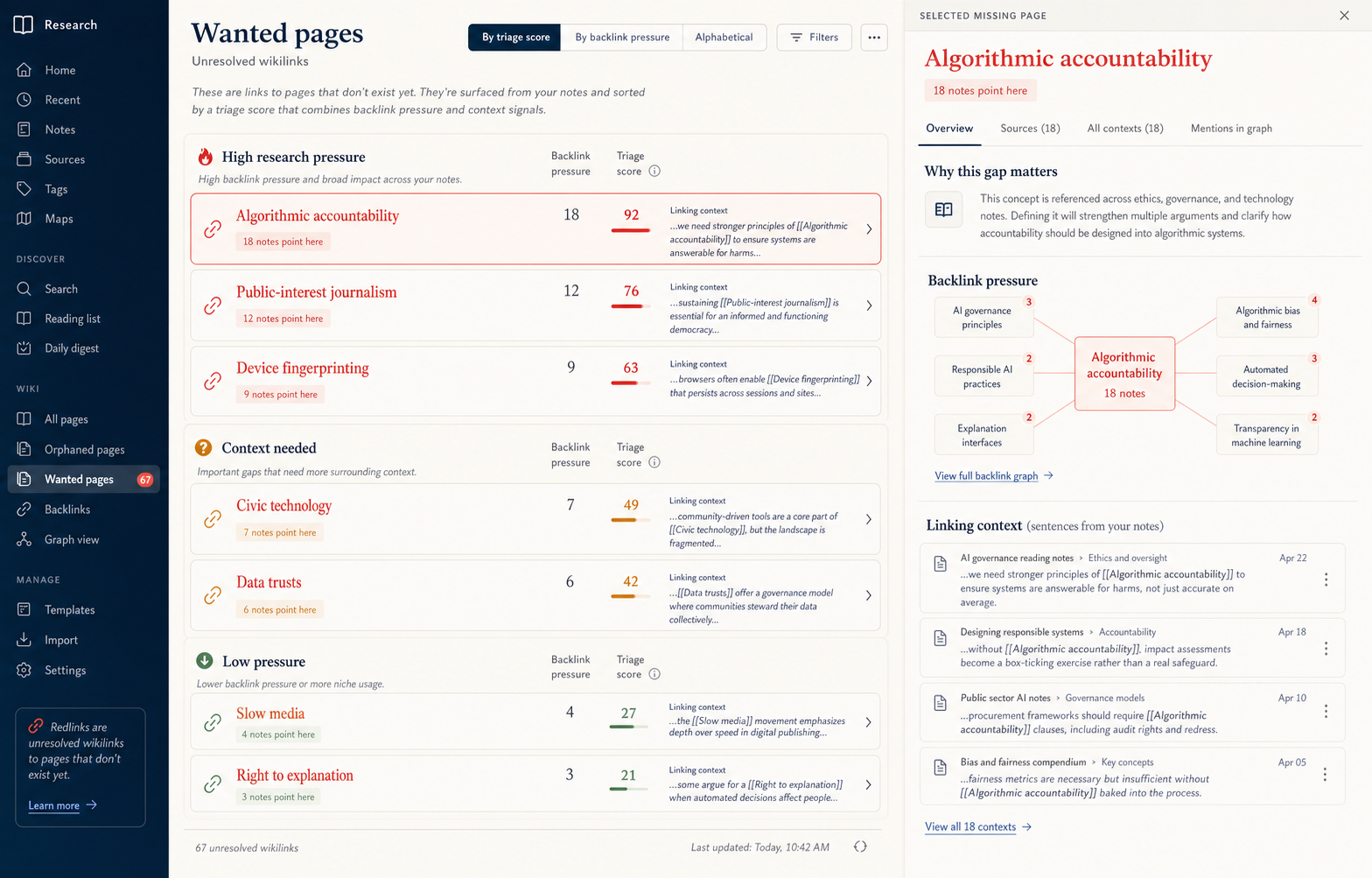
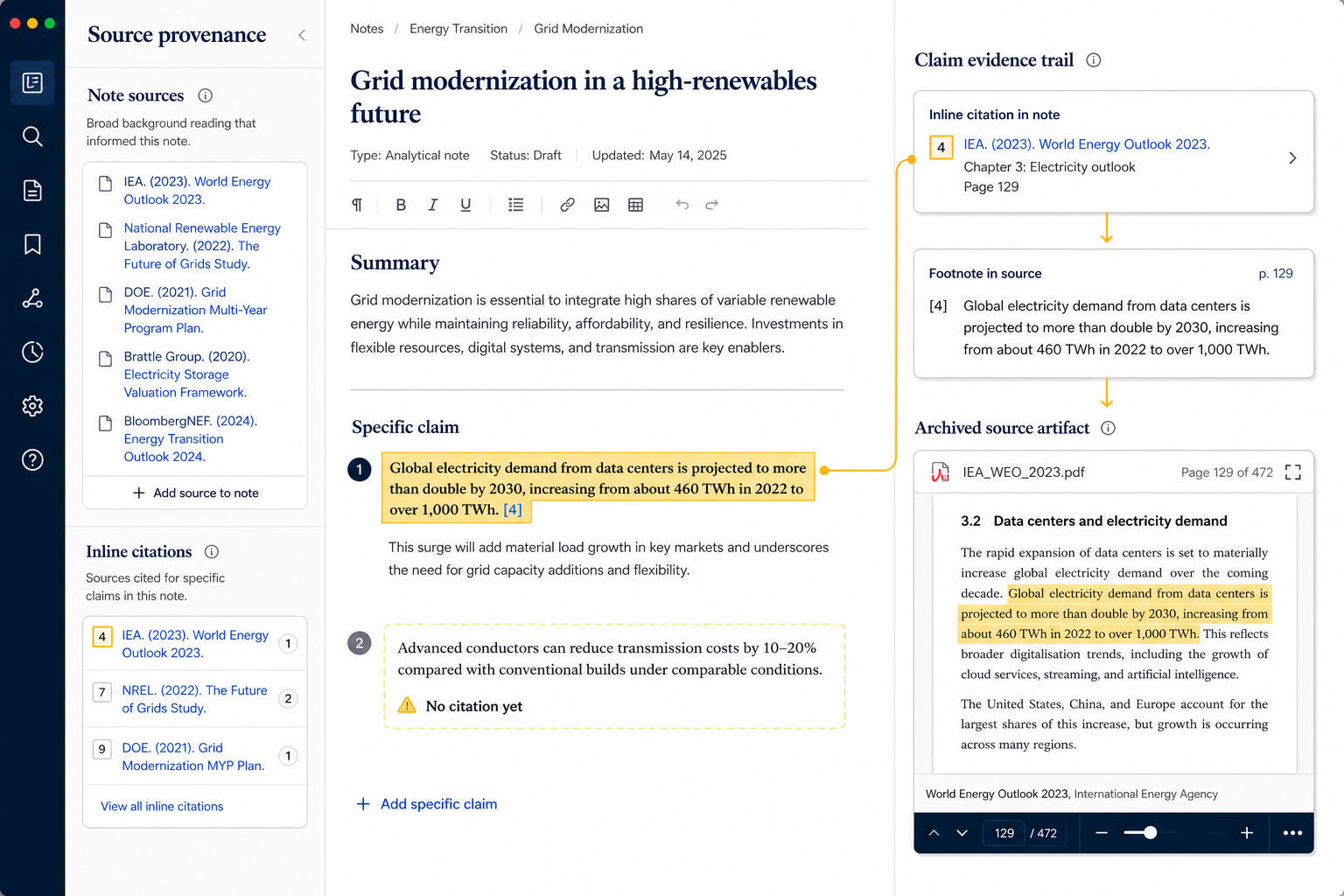
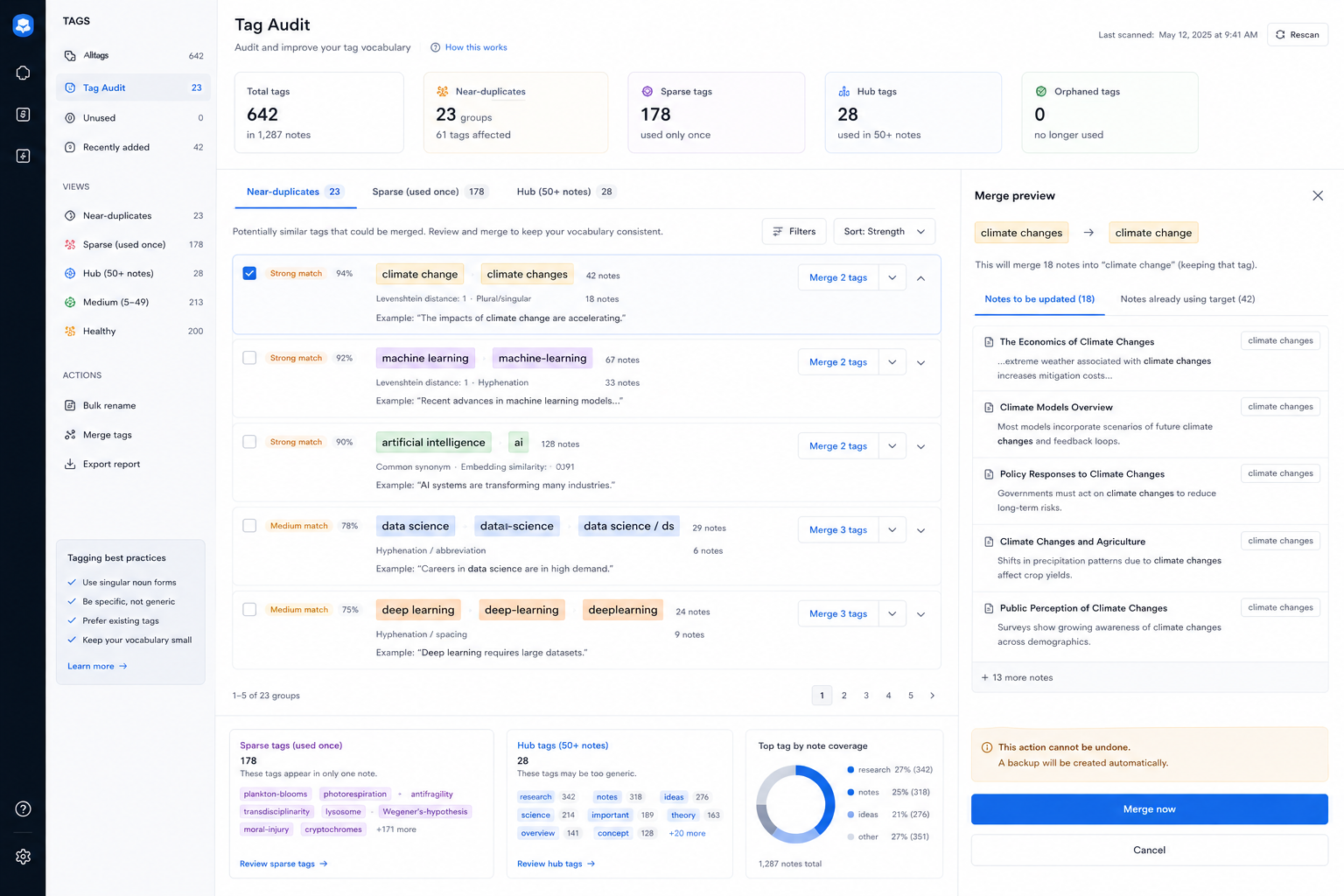
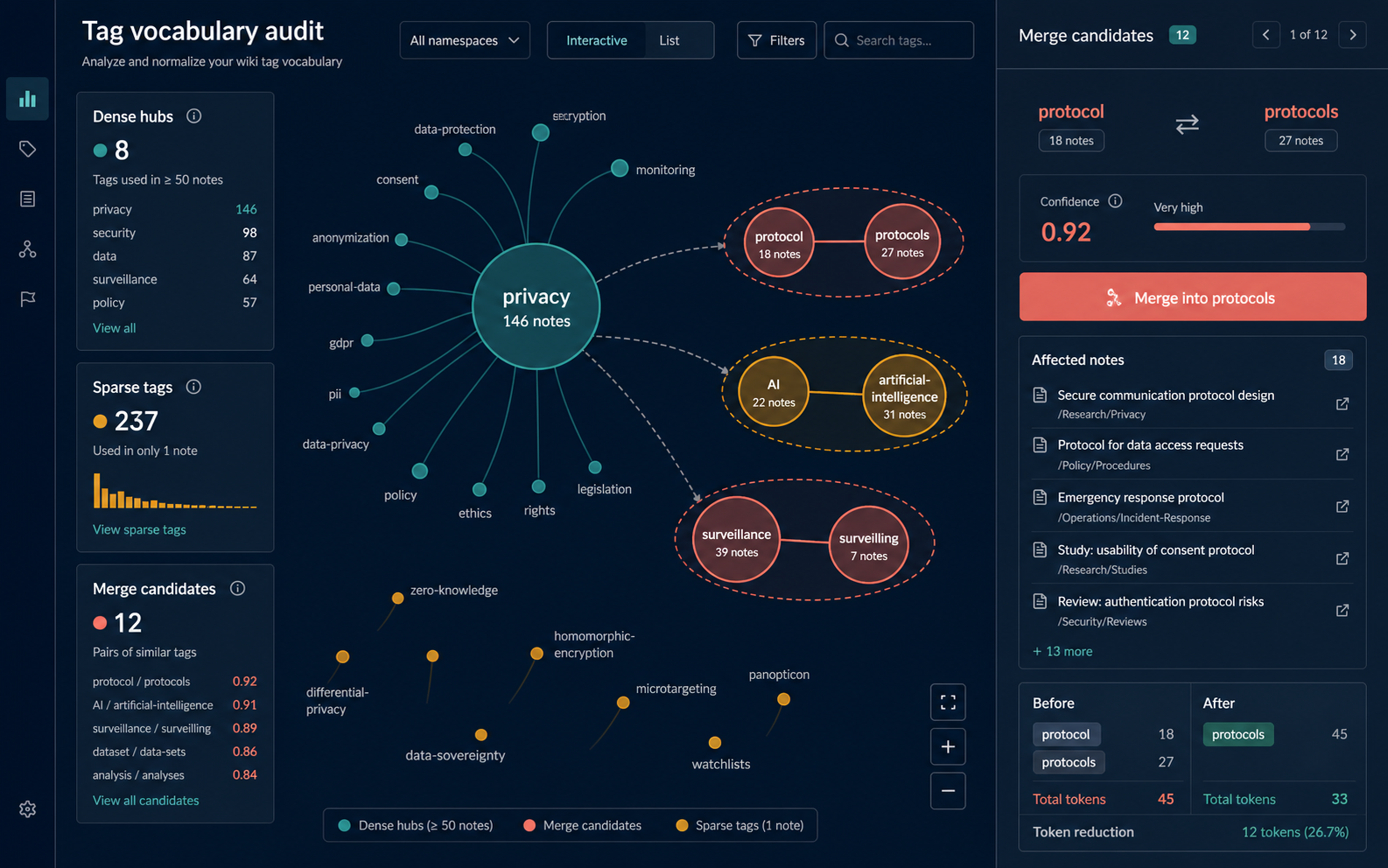
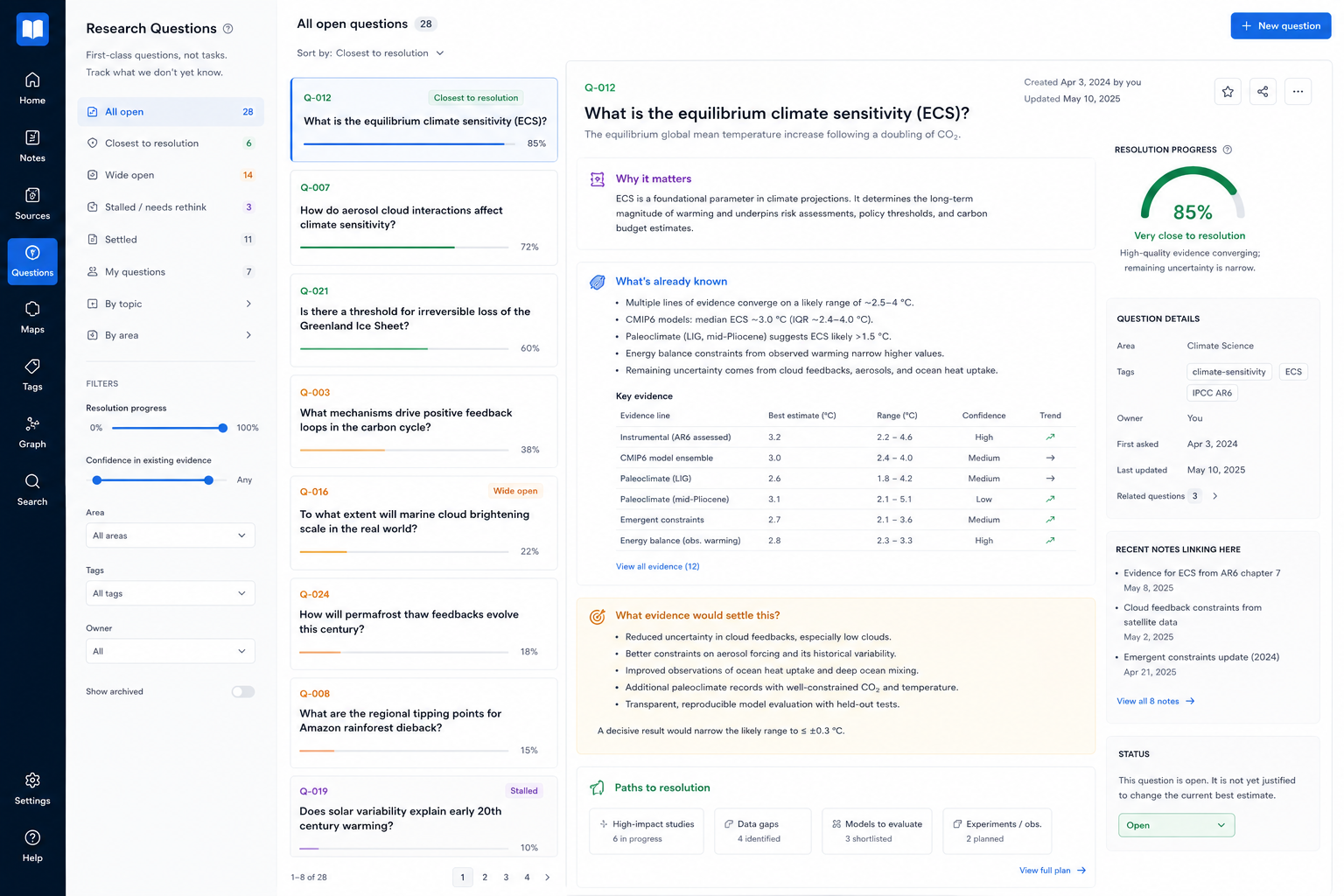
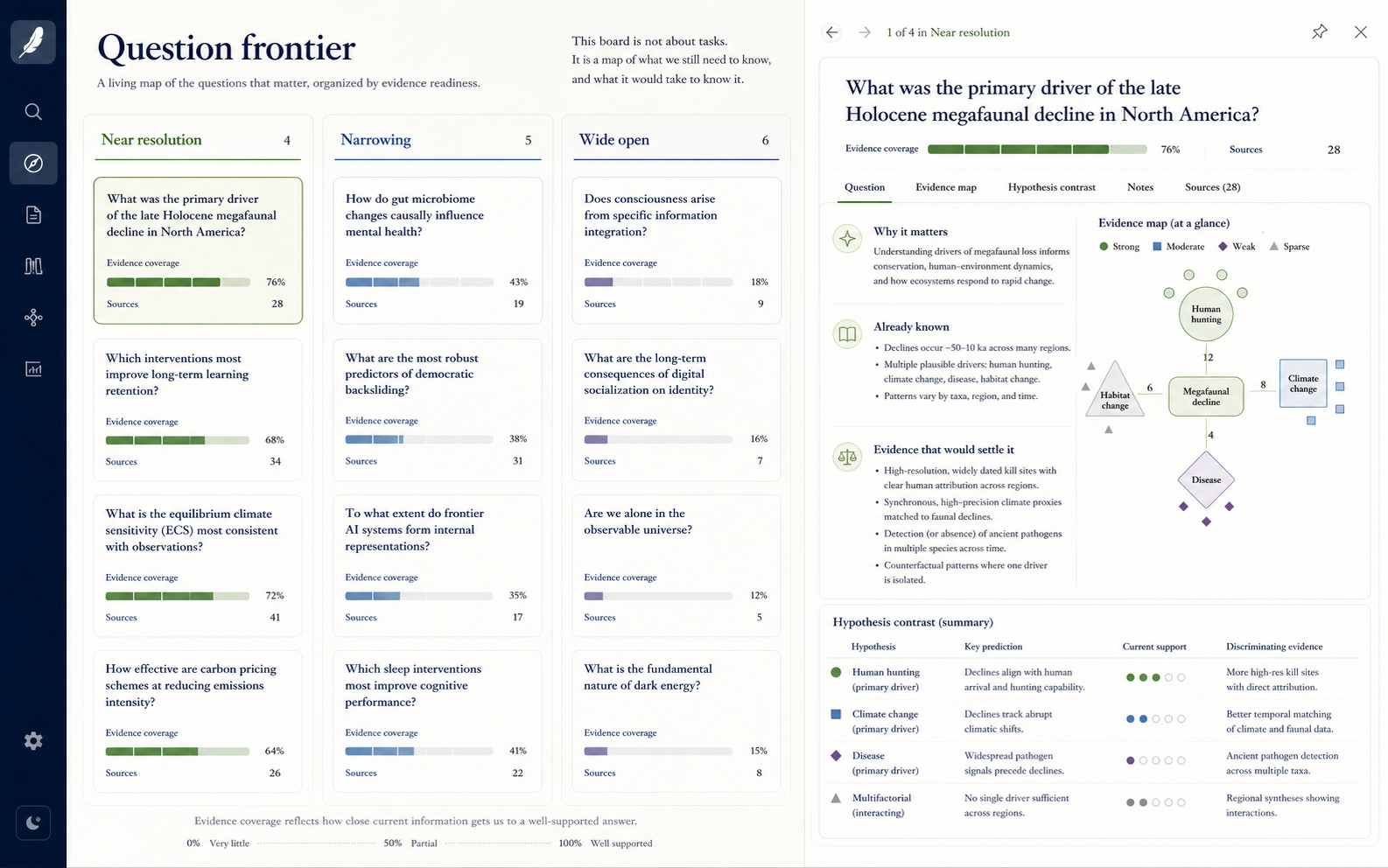
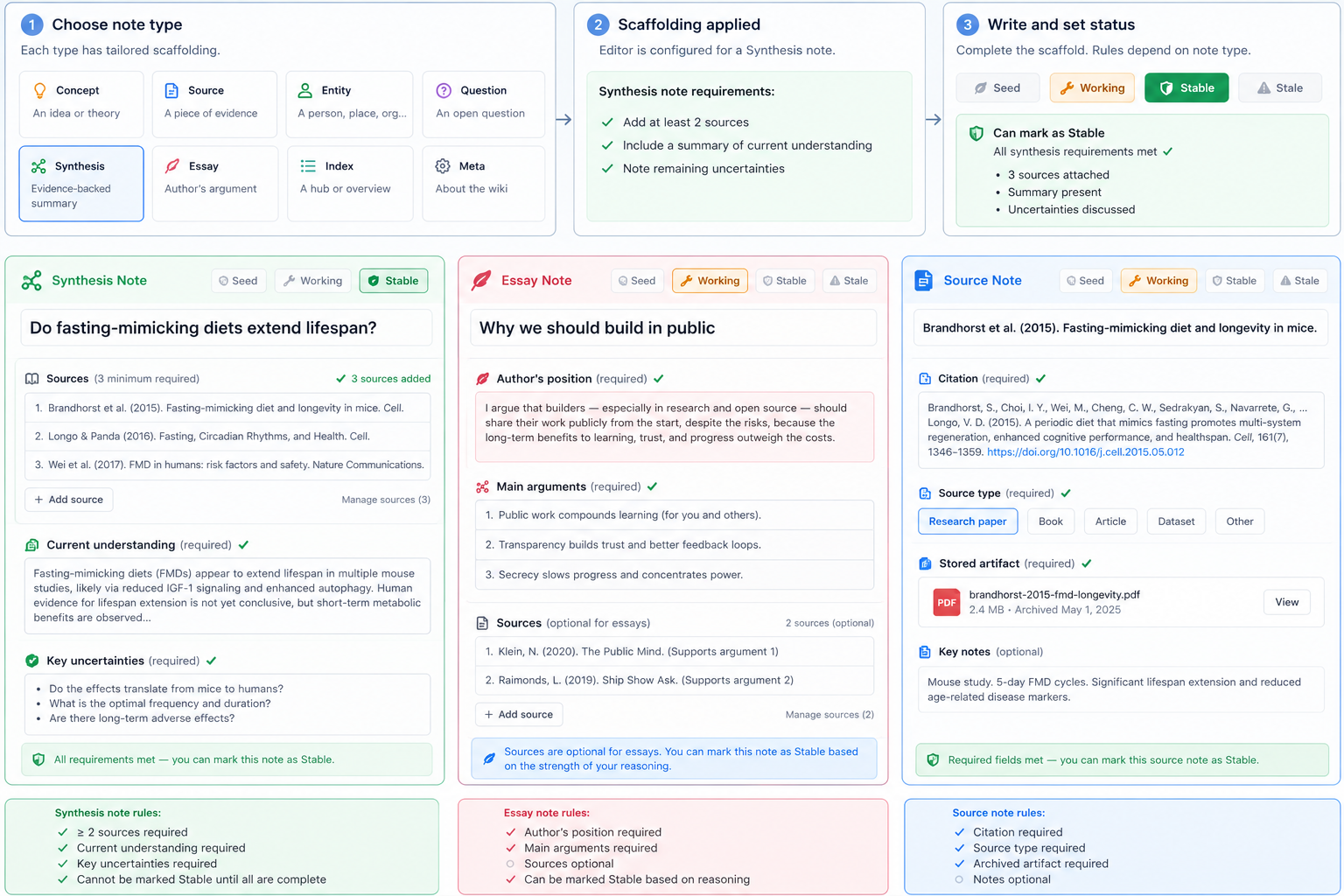
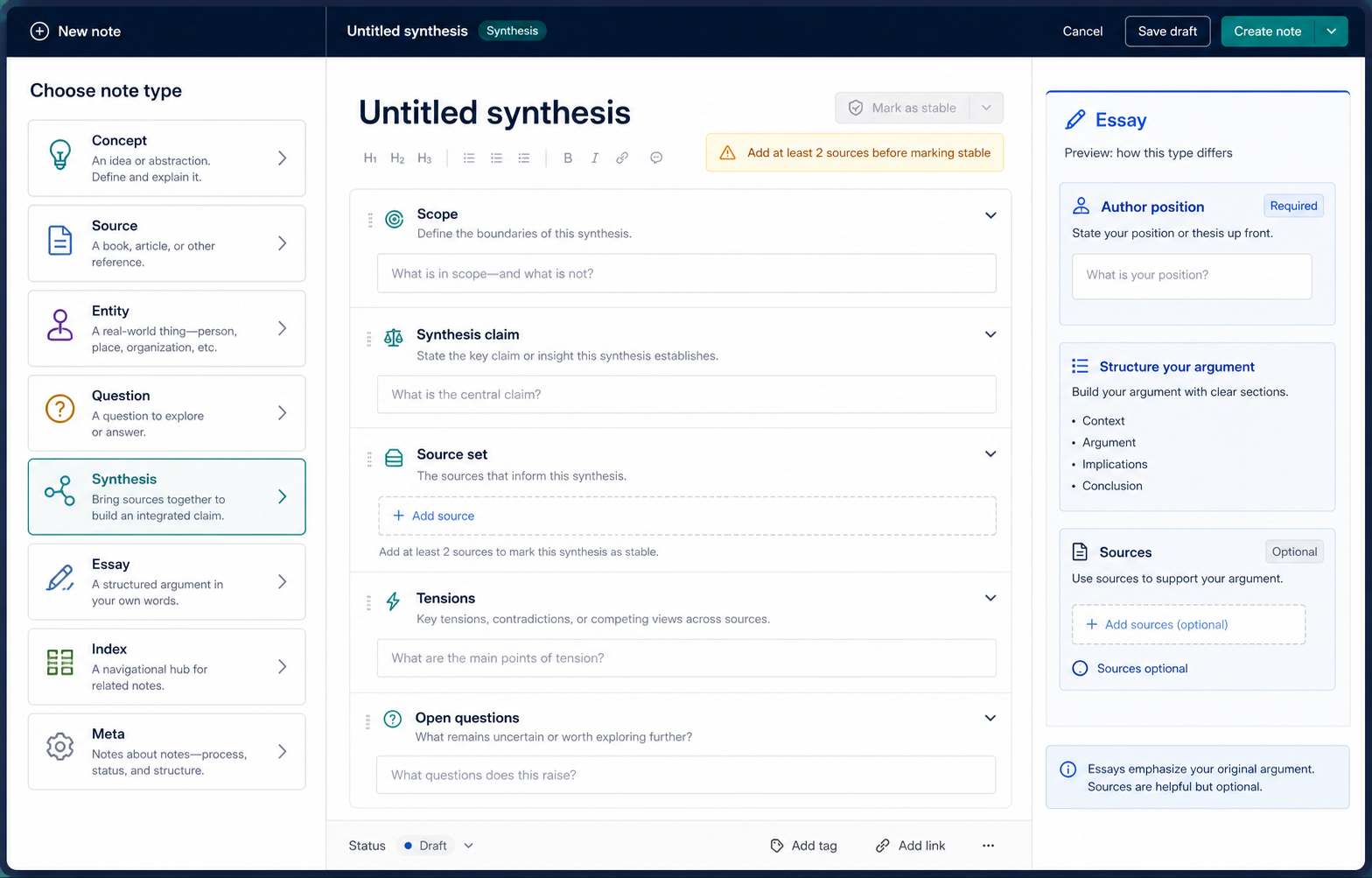
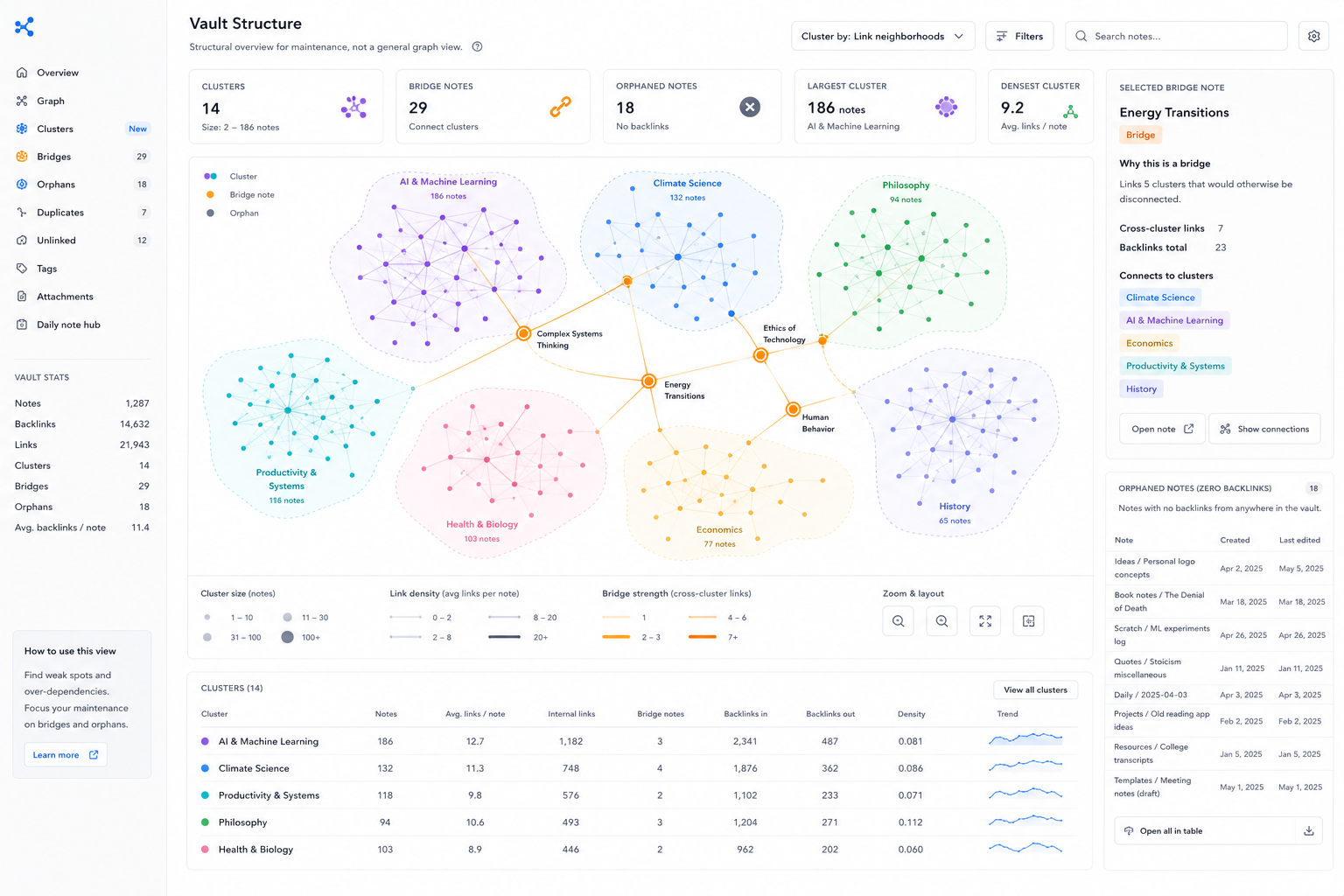
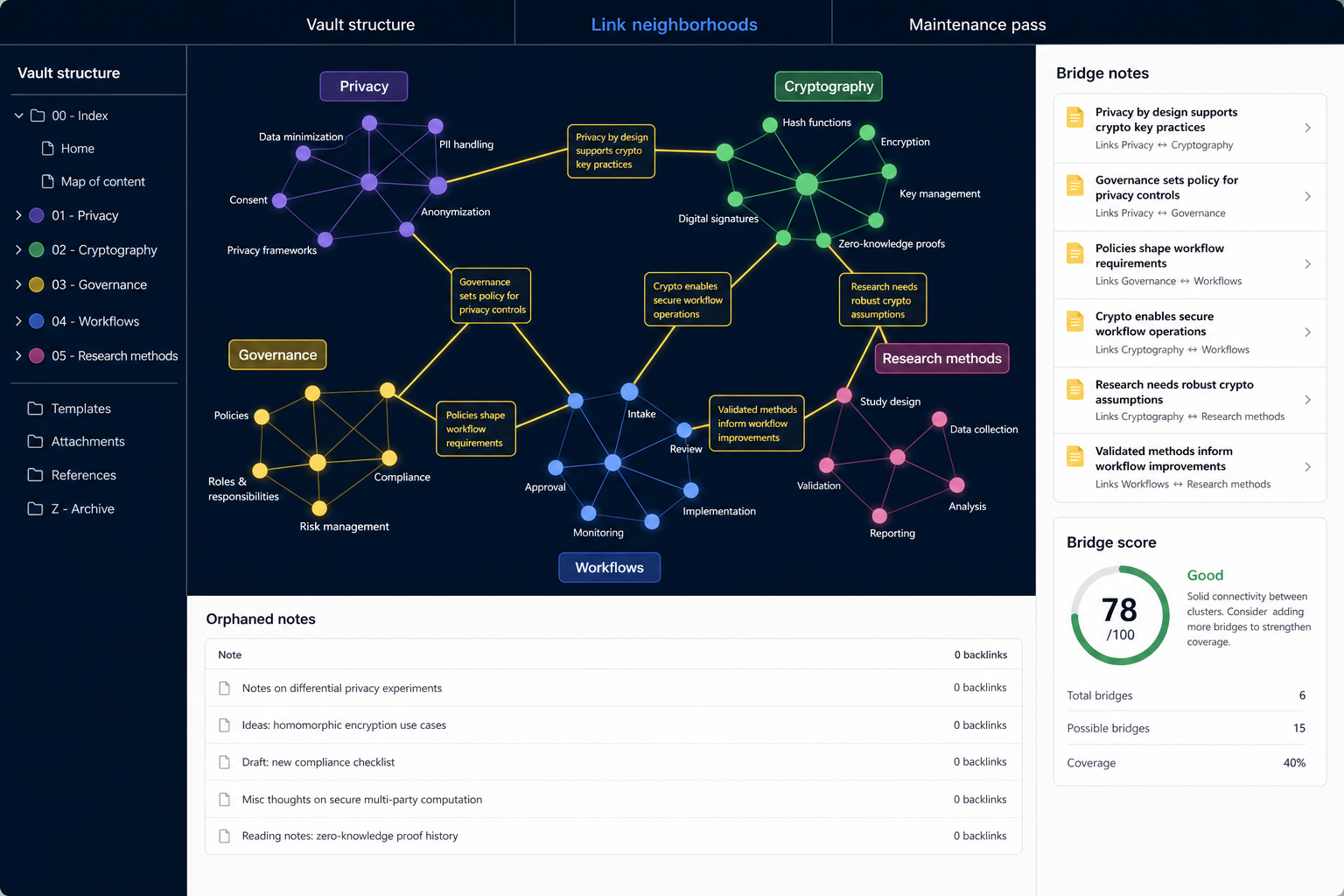
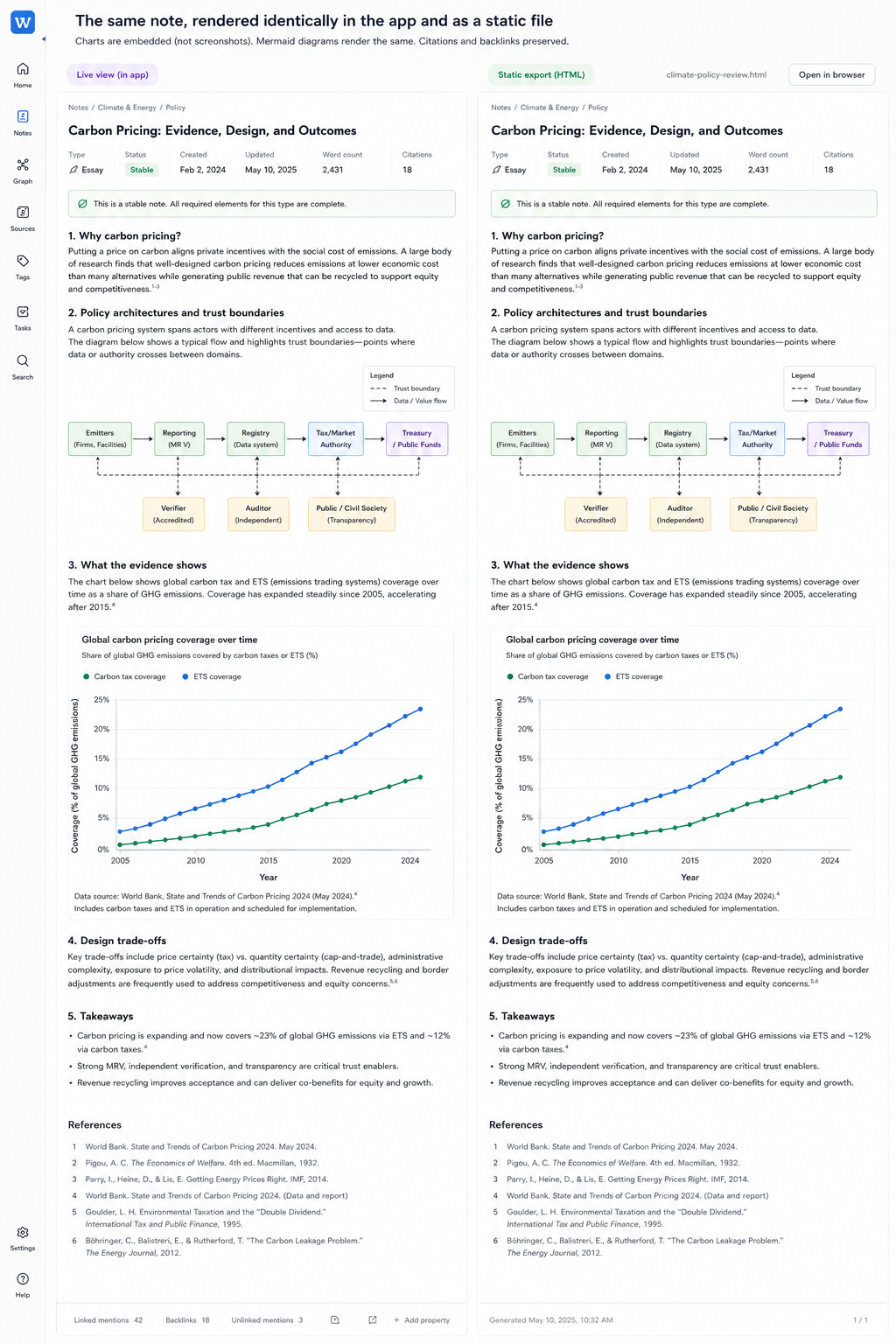
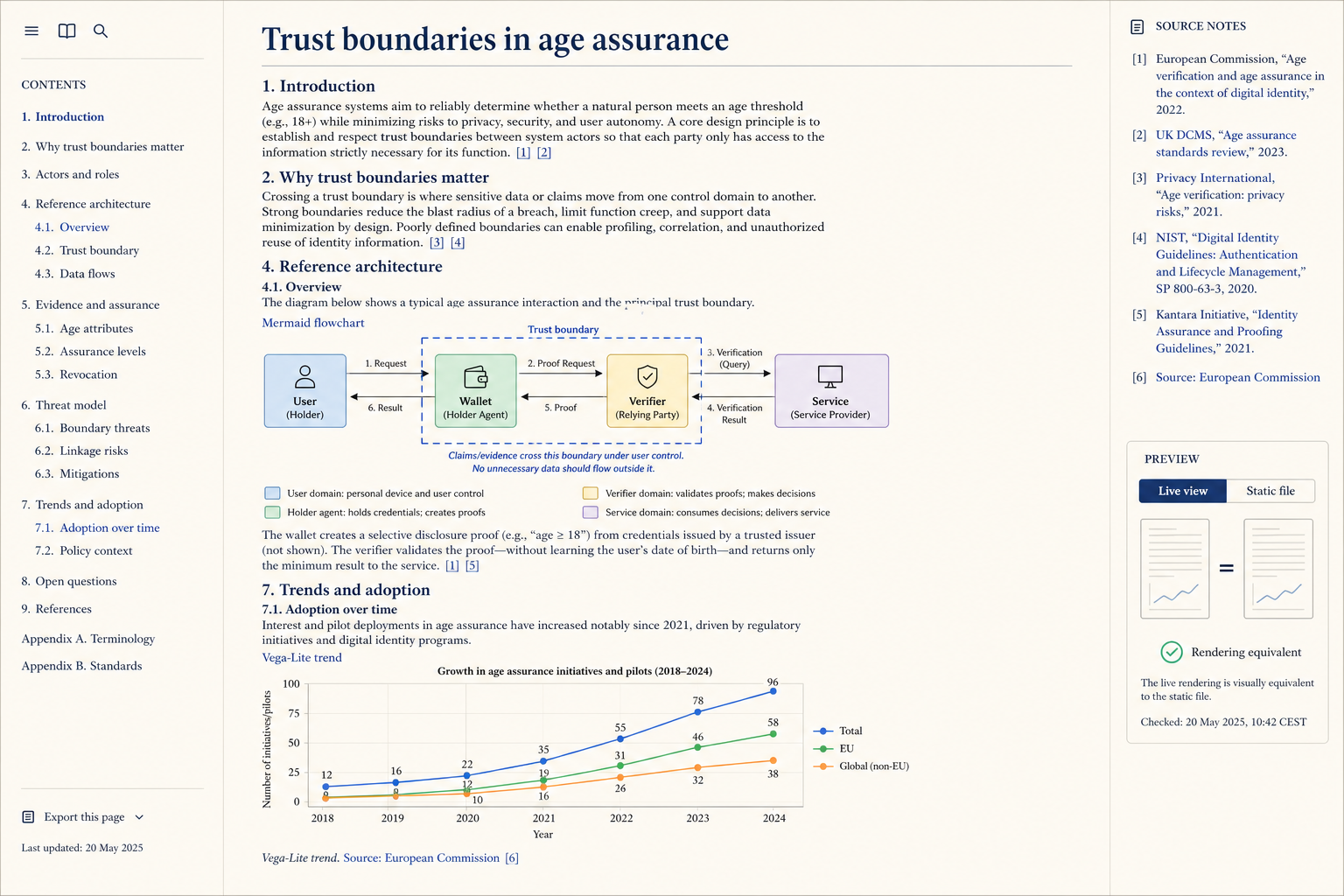
Half the set describes software the wiki is not.
The tag audit, the note composer, the question frontier drawn as a board,
and the cluster explorer drawn as a live filtering dashboard
all assume persistent state and mutating controls —
merge buttons, draft saves, live filters —
which a statically rendered site cannot provide,
and which in this wiki are just commands run by an agent
rather than screens a reader operates.
They read as alternative interfaces to the maintenance workflows
described in Build and rendering pipeline,
not as proposals for the reading surface.
Three carried ideas that survived into the reading interface.
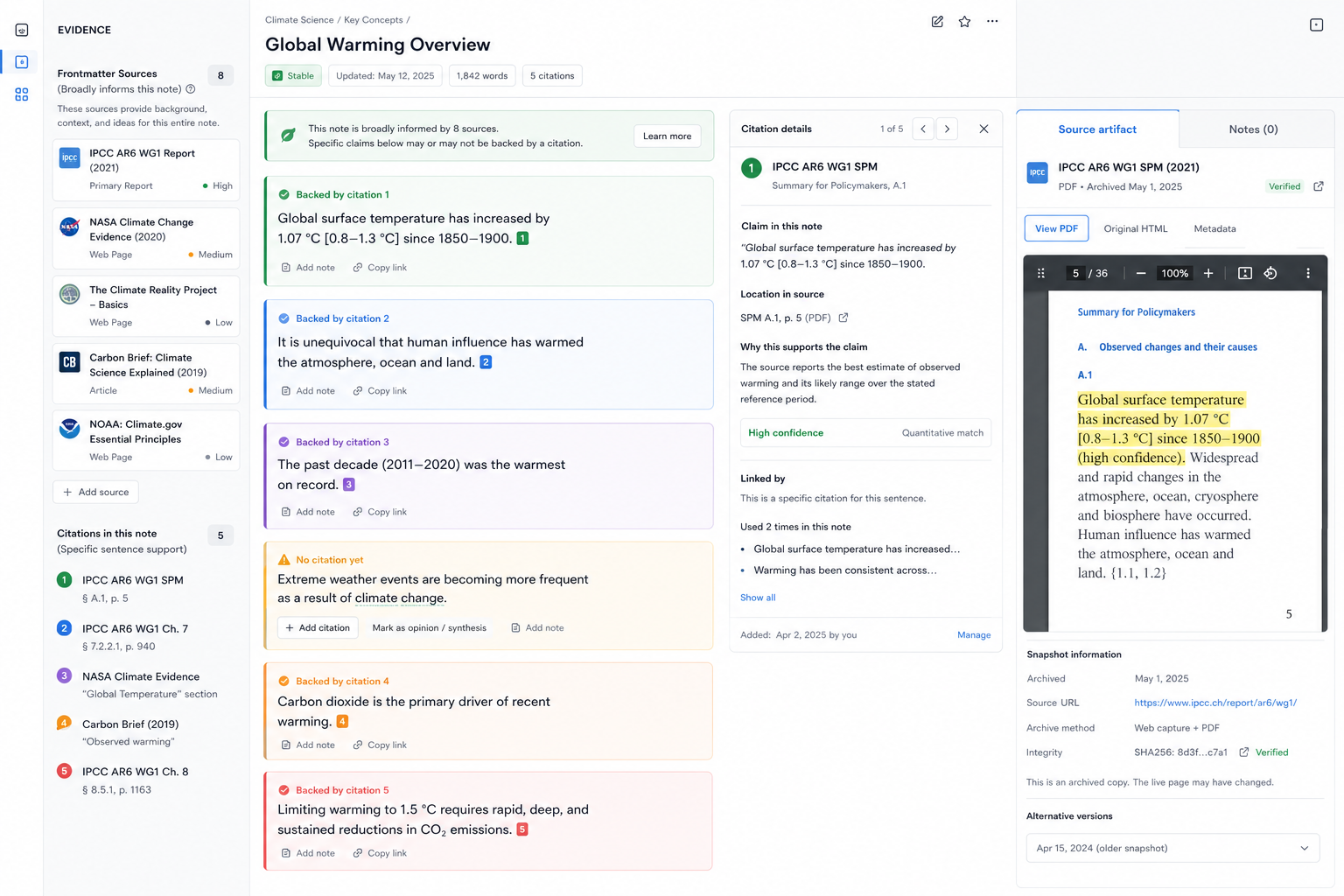
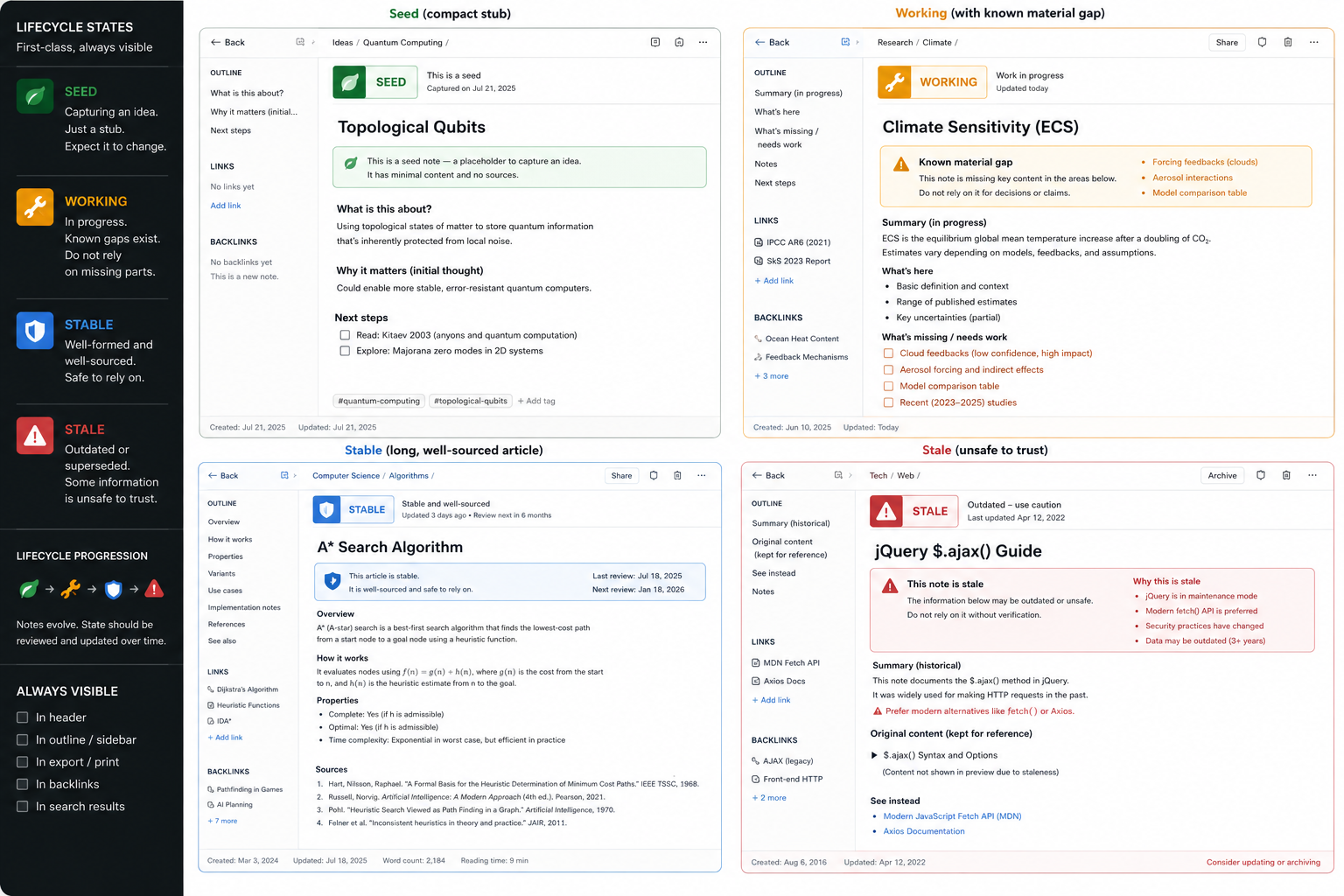
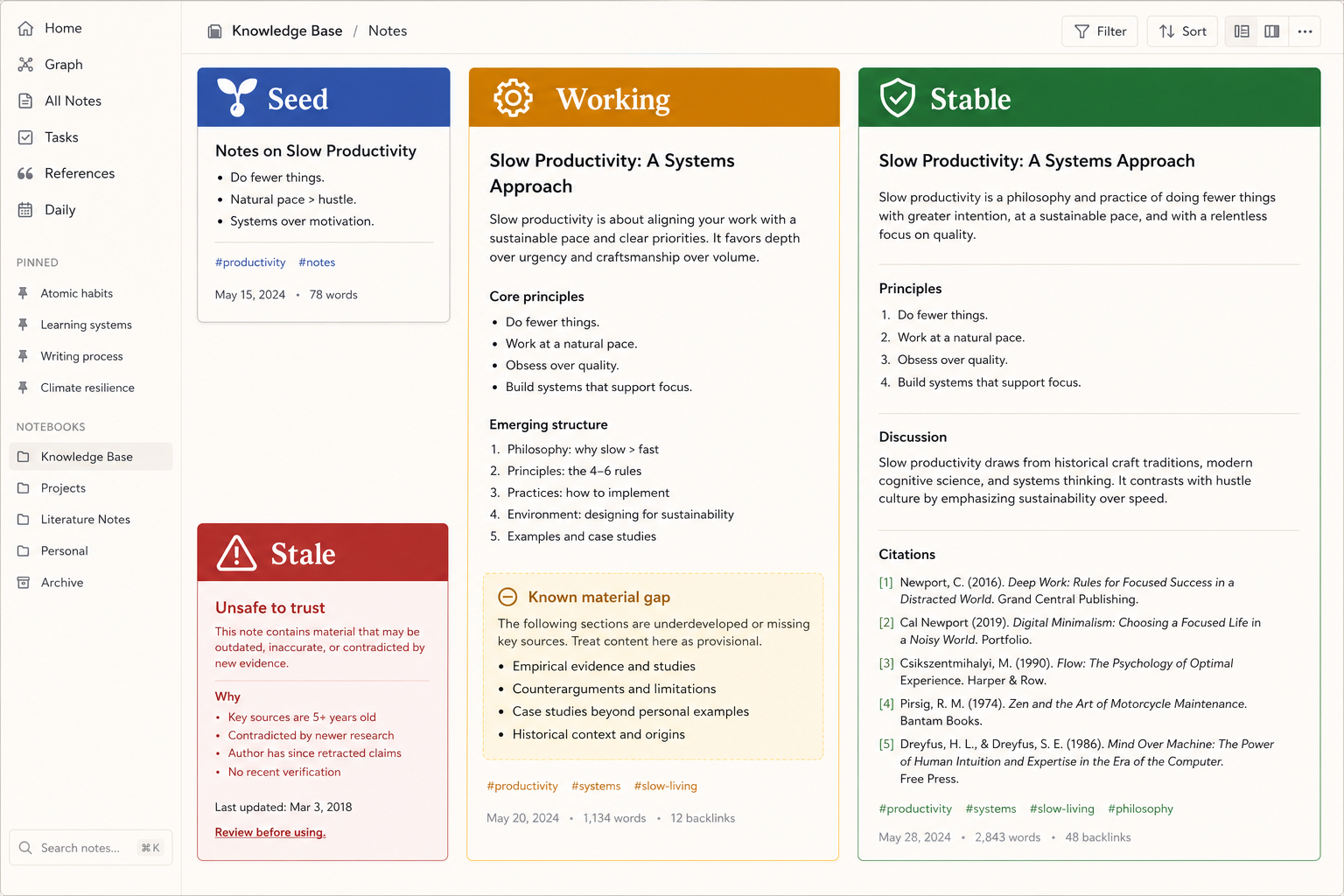
The lifecycle view turns the working and stale states
described in Note lifecycle
into callouts with real content —
a named gap, a named unsafe claim —
rather than a badge that only encodes a word.
The provenance trail distinguishes the frontmatter sources inventory
from claim-level footnotes as separate visual tiers,
which is exactly the distinction drawn in
Linking and citation conventions,
and extends it to the archived artifact behind the citation.
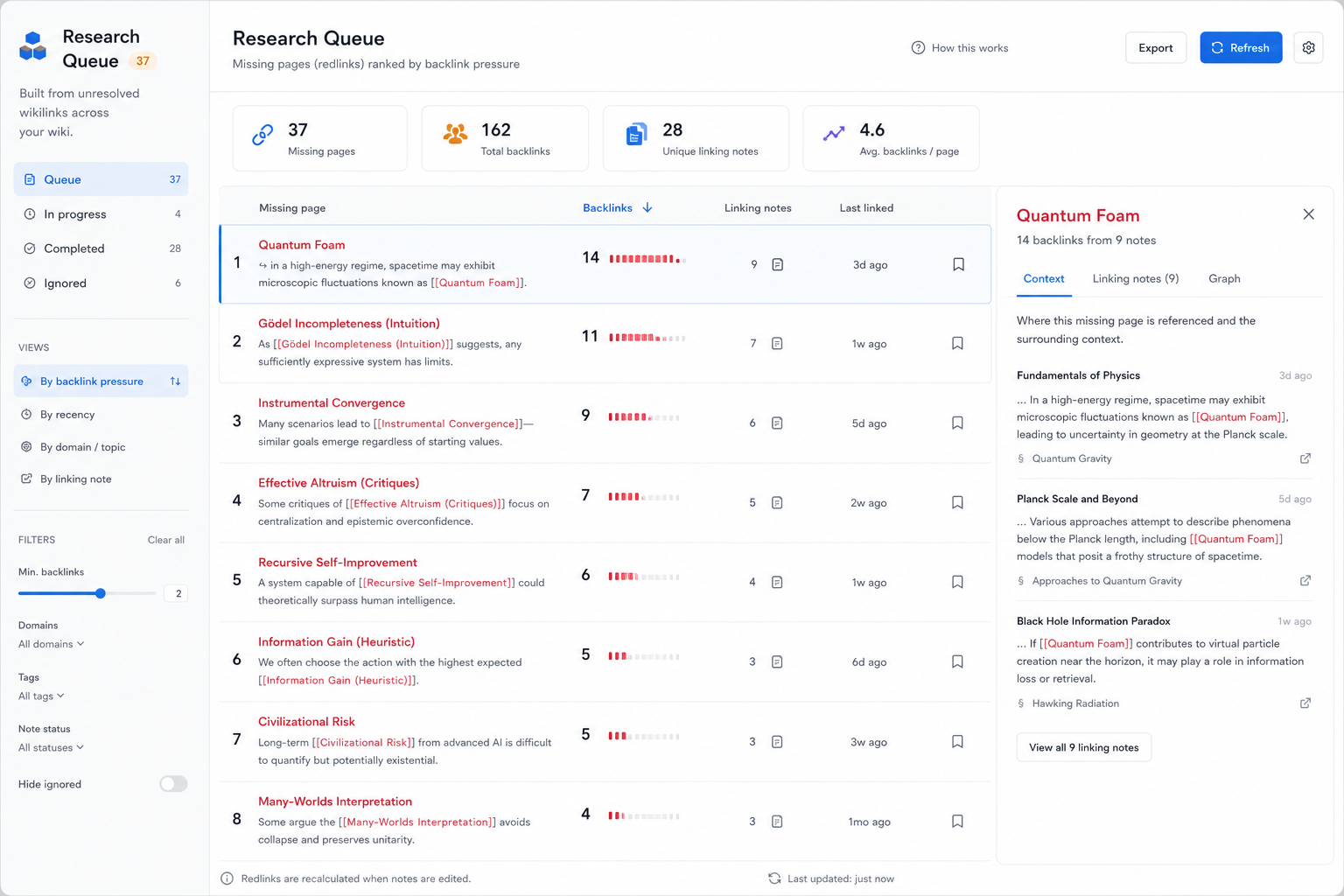
The redlink images show the linking sentence beside an unresolved wikilink,
which suggests how a redlink might carry its own context inline.
Reading interface redesign proposals records which of these ideas were adopted.
Built on 17 sources (17 archived here).
Working out connections…
Sources
- 2026-07-21-wiki-feature-mockup-prompts.md
- 2026-07-21-feature-lifecycle-first-note-view-chatgpt.png
- 2026-07-21-feature-lifecycle-first-note-view-codex.png
- 2026-07-21-feature-redlink-research-queue-chatgpt.png
- 2026-07-21-feature-redlink-research-queue-codex.png
- 2026-07-21-feature-provenance-citation-trail-chatgpt.png
- 2026-07-21-feature-provenance-citation-trail-codex.png
- 2026-07-21-feature-tag-merge-candidate-audit-chatgpt.png
- 2026-07-21-feature-tag-merge-candidate-audit-codex.png
- 2026-07-21-feature-question-note-frontier-chatgpt.png
- 2026-07-21-feature-question-note-frontier-codex.png
- 2026-07-21-feature-type-aware-note-composer-chatgpt.png
- 2026-07-21-feature-type-aware-note-composer-codex.png
- 2026-07-21-feature-link-graph-cluster-explorer-chatgpt.png
- 2026-07-21-feature-link-graph-cluster-explorer-codex.png
- 2026-07-21-feature-diagram-chart-embedded-note-chatgpt.png
- 2026-07-21-feature-diagram-chart-embedded-note-codex.png
Working out the neighbourhood…
Model contributions
Measured by git-blame lines per AI model (99 total).
{"width": 320, "height": 320, "data": {"values": [{"model": "Claude Opus 5", "label": "Claude Opus 5 (100%)", "lines": 99, "share": 1.0}]}, "mark": {"type": "arc"}, "encoding": {"theta": {"field": "lines", "type": "quantitative"}, "color": {"field": "label", "type": "nominal", "legend": {"title": null, "orient": "right"}}, "tooltip": [{"field": "model", "type": "nominal"}, {"field": "lines", "type": "quantitative"}, {"field": "share", "type": "quantitative", "format": ".1%"}], "order": {"field": "lines", "type": "quantitative", "sort": "descending"}}}